Your words hurt, but I choose forgiveness, Governor Wanga tells Orengo
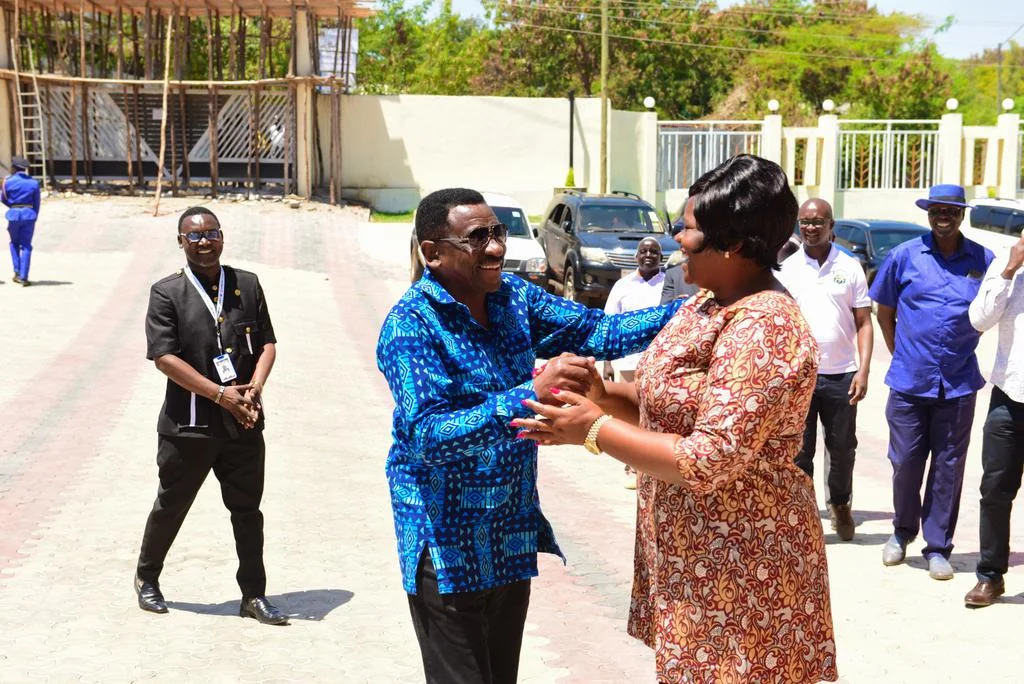
The Homa Bay Governor said she initially remained silent because she believes not every disagreement must be turned into a public exchange, but added that some moments go beyond politics and require reflection because of their wider meaning.
A quiet political disagreement has now taken a more personal turn, after Homa Bay Governor Gladys Wanga publicly addressed Siaya Governor James Orengo over remarks she says left her hurt and raised deeper questions about how women in leadership are treated in public life.
In an open letter issued on Thursday, Gladys Wanga said she was speaking in her personal capacity and not in her official roles as Homa Bay Governor or chairperson of the Orange Democratic Movement. She said she felt compelled to respond after comments made by James Orengo, whom she described as a senior leader she has long respected.
“I have always held you in immense respect. To many of us who entered public life after your generation, you have represented courage, conviction and the possibility of principled leadership,” Wanga wrote.
She said she initially remained silent because she believes not every disagreement must be turned into a public exchange, but added that some moments go beyond politics and require reflection because of their wider meaning.
Wanga described Orengo as a figure she has admired for years, saying she has always viewed him as an elder and someone she has looked up to with deep respect.
“You have been around for a long time, and I have personally regarded you with the esteem one reserves for an elder and, in many ways, with the affection and deference one would extend to a father figure,” she wrote.
However, she said the remarks in question went beyond political disagreement and reflected a wider issue affecting women in leadership spaces.
“When remarks directed at a woman carry undertones that diminish, ridicule or reduce her because of her gender, age or place in public life, they travel far beyond their immediate target,” she said.
She added that such comments do not remain in political circles but extend into society, influencing how women and girls are treated in everyday life.
“They become an echo familiar to millions of women and girls who have endured various forms of gender-based violence, exclusion, intimidation and dismissal in workplaces, homes and public spaces.”
Wanga said women leaders often face a different standard of judgment compared to their male counterparts, making leadership a more demanding space for them.
She noted that society still places expectations on women that limit how they should speak, lead, or occupy space in public life.
“Many women are told to speak more softly, lead smaller, occupy less space, or defer — not because they are wrong, but because they are women,” she said.
She emphasized that leadership should not come at the cost of dignity, calling for greater reflection on how words from leaders shape public attitudes.
“I write in the hope that moments such as these can remind us all, especially those of us privileged to be in leadership, that strength and dignity are never diminished by kindness,” she said.
Despite expressing disappointment, Wanga maintained a calm and conciliatory tone throughout the letter, avoiding escalation into political confrontation.
She said she still holds Orengo in high regard as a senior leader whose contribution to public life remains significant.
“I therefore choose forgiveness,” she stated.
Wanga added that she remains open to continued engagement and cooperation in matters affecting the public, stressing the need for unity and constructive dialogue.
“More importantly, I choose to leave the door open for engagement, dialogue and collaboration on matters that uplift our people and propel our community forward,” she wrote.




Comments
Sign in with Google to comment, reply, and like comments.
Continue with Google