DRC, Rwanda recommit to peace deal as Eastern Congo violence escalates
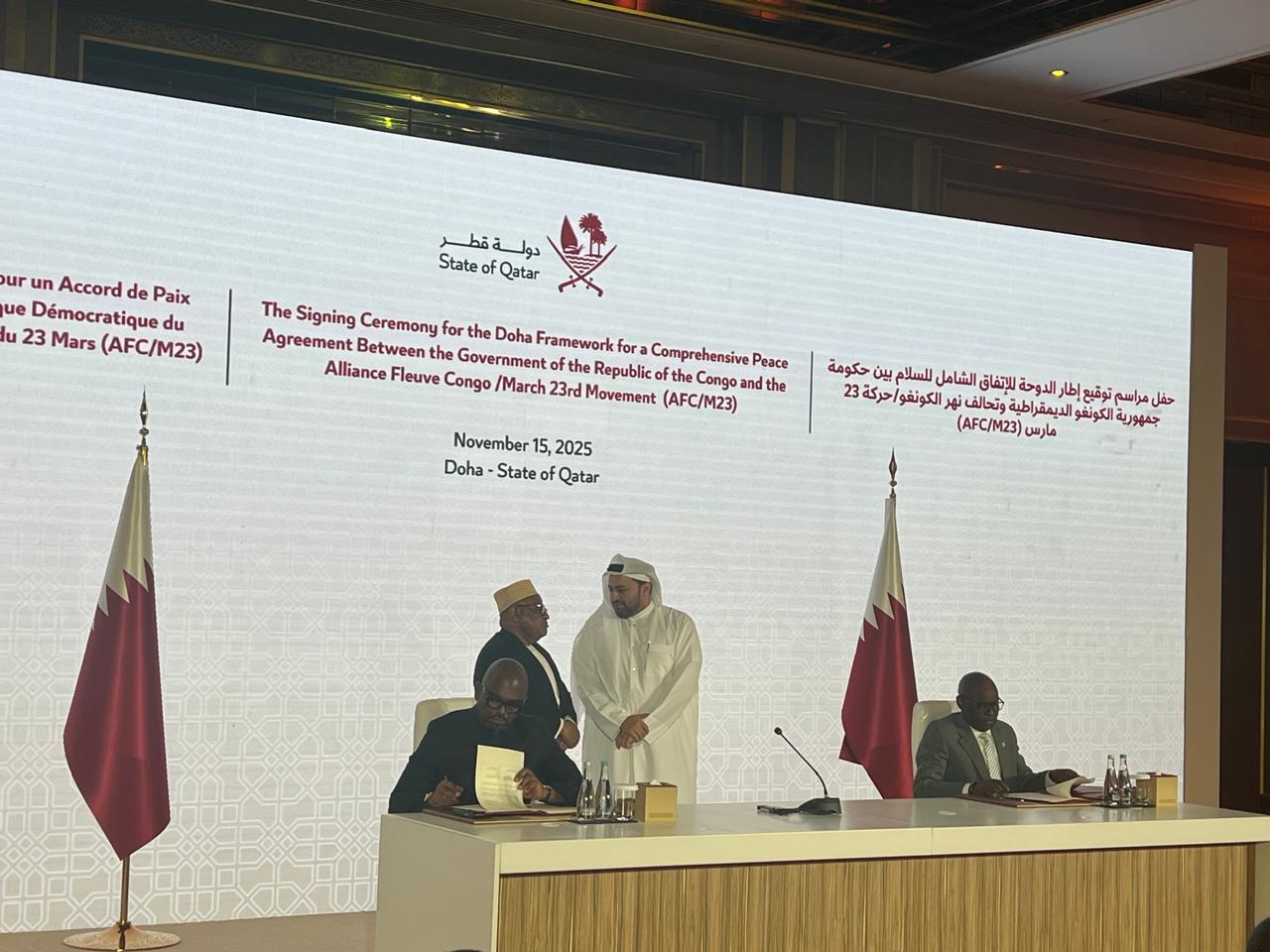
In a joint statement released after the meeting, participants expressed concern over deteriorating security conditions in Eastern DRC.
The Democratic Republic of Congo (DRC) and Rwanda have renewed their commitment to implementing a landmark peace agreement signed last year, as growing violence in Eastern Congo and a worsening humanitarian crisis raise fresh concerns about the stability of the region.
The renewed pledge was made during the sixth meeting of the Joint Oversight Committee (JOC) held in London on June 24, bringing together representatives from the DRC and Rwanda alongside officials from the United States, Qatar, Togo in its role as African Union mediator, and the African Union Commission.
In a joint statement issued after the meeting, participants expressed alarm over the deteriorating security situation in Eastern DRC, warning that continued fighting could threaten ongoing efforts aimed at restoring peace.
The committee voiced "serious concern over the escalating fighting, the impact of drone strikes on civilians and the peace process, and the deepening humanitarian situation in Eastern DRC, including the ongoing Ebola outbreak."
Against that backdrop, the parties stressed "the urgent need for actions that make the ceasefire effective" as they sought to prevent further deterioration of the situation on the ground.
Both countries reaffirmed their commitment to fully implement the peace agreement signed on June 27, 2025, including provisions relating to drone strikes and security cooperation.
The DRC and Rwanda also agreed to "de-escalate tensions immediately, especially around Minembwe", while pledging to use "their respective influence with all parties on the ground" to support efforts aimed at reducing hostilities.
As part of the measures agreed upon, the two countries committed to supporting the swift deployment of the Expanded Joint Verification Mechanism Plus (EJVM+) to begin verification missions. They also pledged to strengthen intelligence cooperation through the Joint Security Coordination Mechanism (JSCM).
The meeting further underscored support for ongoing talks involving the DRC and AFC/M23 under the Doha process. Both sides agreed to "lend full support to bring a successful conclusion to the negotiations underway between the DRC and AFC/M23 in the Doha process."
They also committed to "refraining from hostile actions or rhetoric" that could hinder the implementation of the Washington Accords and broader peace efforts.
The conflict in Eastern Congo has deep roots dating back to the aftermath of the 1994 Rwandan genocide and the regional conflicts that followed in the years after.
The current phase of the conflict intensified following the resurgence of the M23 rebel movement in late 2021 and 2022. The group has maintained that it is defending the interests of Congolese Tutsis while accusing the Congolese government of failing to honour previous agreements.
Over time, the conflict has become increasingly linked to accusations of foreign involvement, ethnic divisions and competition for control of mineral-rich areas across Eastern Congo.
Eastern DRC continues to face one of the world's most severe humanitarian emergencies, with ongoing violence forcing millions of people from their homes and limiting access to healthcare and humanitarian assistance. International concern has also grown over the Ebola outbreak in the region, with aid organisations warning that insecurity is making response efforts more difficult.




Comments
Sign in with Google to comment, reply, and like comments.
Continue with Google