Why Kenya needs sign language beyond TV screens, Umulkher explains
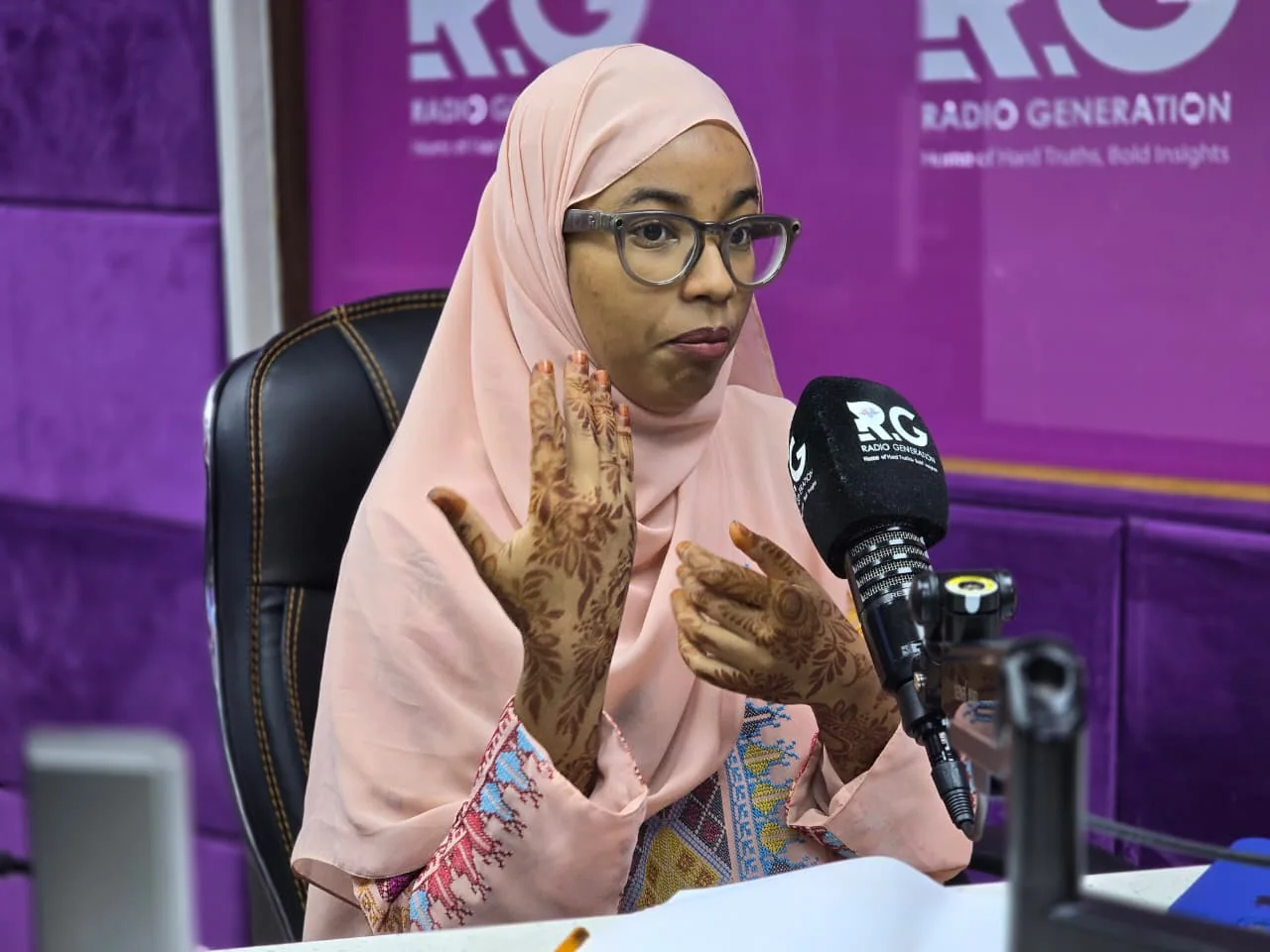
MP Umulkher explained that the Bill is widely misunderstood as disability legislation, yet its primary objective is to promote, regulate and strengthen the use of Kenyan Sign Language across public institutions and society, ensuring greater inclusion and equal access to essential services for deaf, hard of hearing and deafblind persons
Nominated MP and human rights activist Umulkher Harun Mohamed has defended the Kenyan Sign Language Bill, 2023, saying the proposed law is aimed at giving practical effect to the constitutional recognition of Kenyan Sign Language and breaking communication barriers that continue to lock many deaf Kenyans out of education, public services and everyday interactions.
Speaking during a Radio Generation interview on Thursday, Umulkher said the legislation has often been wrongly viewed as a disability bill when its central purpose is to recognise, promote and regulate Kenyan Sign Language as an official language used across public institutions and society.
The Bill, which was recently passed by the National Assembly in June 2026 with amendments, was co-sponsored by Suba North MP Millie Odhiambo-Mabona and Nominated MP Umulkher Harun after it originated in the Senate under Senator Crystal Asige.
The proposed law seeks to expand the use of Kenyan Sign Language in schools, courts, media houses, telecommunications services and other public institutions to improve inclusion and access to services for deaf, hard of hearing and deafblind persons.
Umulkher noted that although the 2010 Constitution recognises Kenyan Sign Language as one of Kenya's official languages, implementation has remained weak, leaving many deaf people unable to fully participate in learning, communication and public life.
"The Kenya Sign Language Bill 2023 is a bill to support the sign language itself. It's not a disability Bill; it's a language bill. If you look at the Kenyan Constitution, it recognises English, Kiswahili and sign language, but we rarely use sign language both in our communication and in our public institutions. This bill is generally to support the use, the practice and the educative part of sign language."
She said the Bill goes beyond requiring television stations to provide sign language interpretation by introducing measures to regulate interpreter training and improve communication services across the country.
https://twitter.com/RadioGenKe/status/2072578408618316045
According to Umulkher, the biggest challenge facing deaf Kenyans is not hearing loss but the inability of society to communicate with them.
"Between me and the deaf person, it's you and I who cannot talk to them. It is not their issue. They can speak; you cannot. Why then do we have to make them adjust to our own biases? The suggestion is that we teach children in Kenya sign language just like we teach them English and Kiswahili. In the next 10 years, you will have a generation that can communicate sign language fluently."
She argued that introducing sign language at the foundation level of education would help remove communication barriers in schools, strengthen inclusion and reduce dropout rates among deaf learners.
While acknowledging that implementation would require investments in teacher training, interpreter deployment and institutional changes, Umulkher maintained that lack of preparedness should not stand in the way of progress.
"If today we are to pass this Bill, we are not ready. Of course, there will be an uproar but it has to happen at some point. The Bill will go on, and Kenya will adjust."
The nominated MP further explained that the legislation proposes the establishment of a Kenya Sign Language Council that would oversee the training, licensing and regulation of interpreters while also helping provide interpretation services in key public institutions.
She said the council would help ensure that qualified interpreters are available in hospitals, police stations, courts and other places where effective communication can determine access to justice, healthcare and other essential services.
"If you go to a police station, there must be an interpreter there. If you go to the courts, you must provide interpreters. If you go to hospitals, how do they communicate with doctors? The idea of the council is not just to regulate but also to provide these services while we prepare the country to learn the language."
Umulkher said the broader goal of the Bill is to guarantee equal opportunities for deaf Kenyans by removing long-standing communication barriers and ensuring that constitutional recognition of Kenyan Sign Language is reflected in practice across the country.



Comments
Sign in with Google to comment, reply, and like comments.
Continue with Google