New survey reveals 4.7 million Kenyans are using drugs
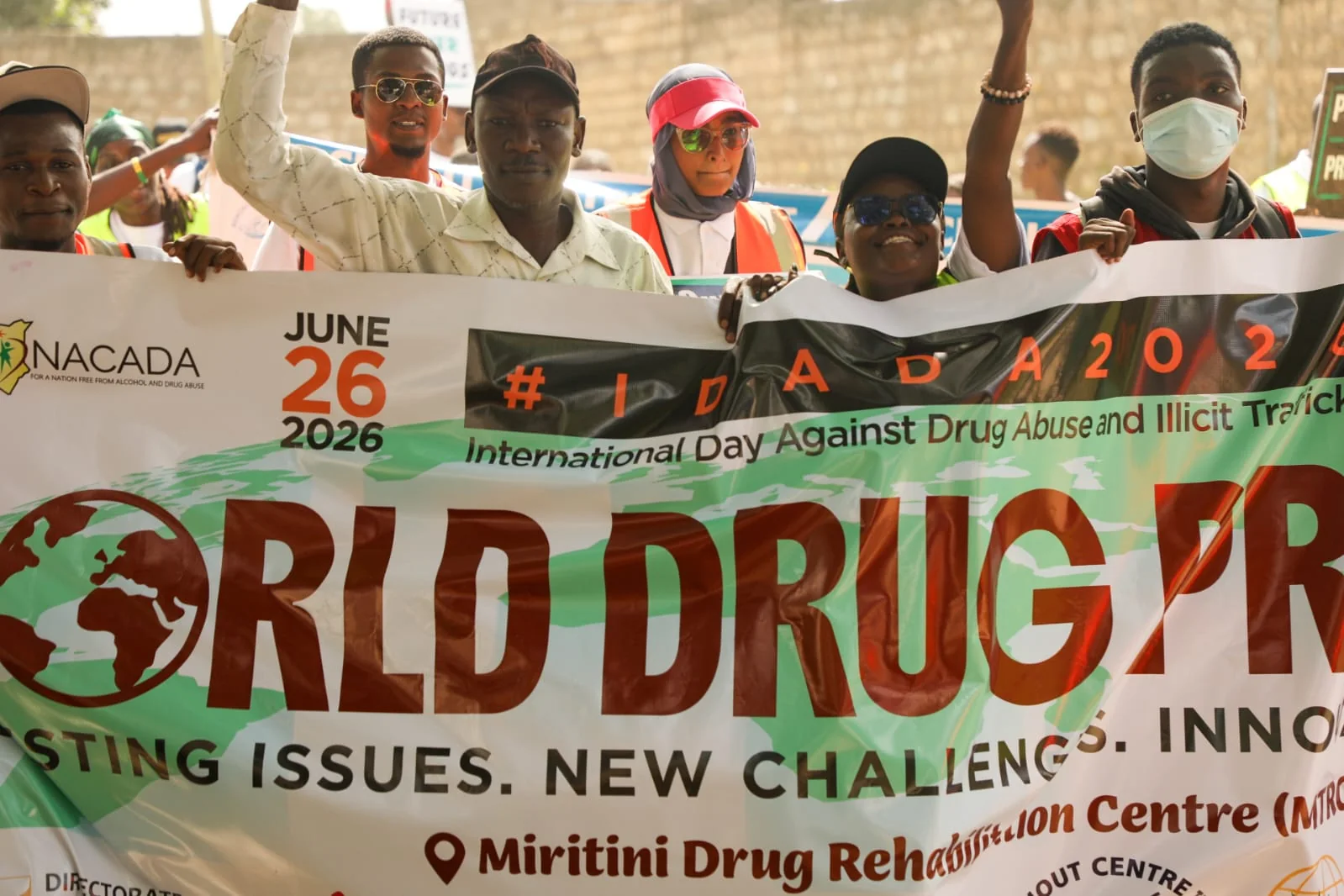
Data released during this year's International Day Against Drug Abuse and Illicit Trafficking celebrations at the Miritini Treatment and Rehabilitation Centre in Mombasa County placed the Coast region at the top of the list, recording a prevalence rate of 29.3 per cent.
A new national survey has laid bare the extent of drug and substance abuse in Kenya, revealing that nearly 4.7 million people aged between 15 and 65 are currently using at least one drug, raising fresh concerns over the impact on families, communities and the country's workforce.
The findings by the National Authority for the Campaign Against Alcohol and Drug Abuse (NACADA) show that roughly one in every six Kenyans within the age group is affected, underscoring the scale of a challenge that continues to cut across regions and social groups.
Data released during this year's International Day Against Drug Abuse and Illicit Trafficking celebrations at the Miritini Treatment and Rehabilitation Centre in Mombasa County placed the Coast region at the top of the list, recording a prevalence rate of 29.3 per cent.
Mombasa County posted the highest rate in the country at 34.4 per cent, making it the most affected county in the latest assessment.
The event brought together government representatives, anti-drug agencies, treatment and rehabilitation professionals, as well as community leaders, who called for renewed efforts to tackle the growing burden of substance abuse.
Principal Secretary for Internal Security and National Administration Raymond Omollo said the numbers reflected people whose lives could still be changed through early support and intervention.
“These are not just statistics. They represent our children, our brothers and sisters, our colleagues, and our future workforce,” he said.
Omollo noted that arrests and crackdowns alone would not be enough to reverse the trend, urging greater investment in prevention programmes, treatment services, rehabilitation and social reintegration.
Interior Cabinet Secretary Kipchumba Murkomen said authorities would continue pursuing drug trafficking networks through stronger intelligence gathering and closer coordination among security and enforcement agencies.
He cited the recent seizure of 1,024 kilograms of crystal methamphetamine in the Indian Ocean, valued at Sh8.2 billion, as evidence of the government's intensified efforts against the illegal drug trade.
NACADA Board Chairman Bishop Stephen Mairori said the agency was embracing new approaches to keep pace with changing patterns of drug use.
According to Mairori, NACADA has introduced wastewater analysis technology that enables the monitoring of drug consumption trends in near real-time, providing faster and more accurate data for intervention measures.
“If the drug problem is changing, our responses must change with it,” he said.
The commemoration also highlighted the role of young people in addressing the problem through a national essay-writing competition.
Among those recognised was Omar Mohamed of Kongowea Secondary School, who emphasised the importance of parents, families and communities in protecting young people from substance abuse.
Participants at the event said the fight against drugs cannot be left to government agencies alone, stressing the need for families, schools, religious organisations, community groups and the private sector to play a more active role in prevention and recovery efforts.



Comments
Sign in with Google to comment, reply, and like comments.
Continue with Google