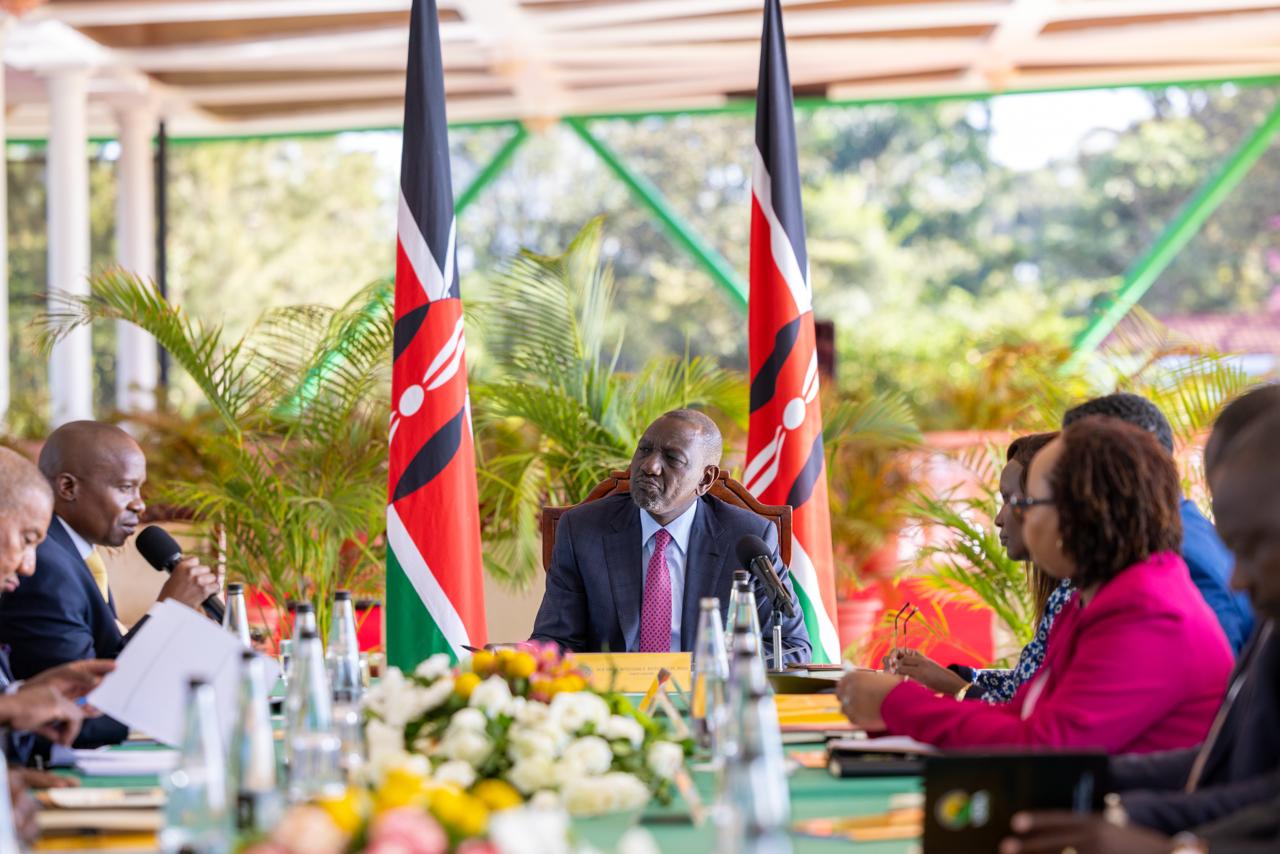
The United Democratic Alliance (UDA) has mandated President William Ruto to spearhead structured coalition talks with the Orange Democratic Movement (ODM) as the two parties move to formalise a political agreement ahead of the 2027 General Election.
The decision was made during a UDA National Executive Committee (NEC) meeting held in Nairobi on Wednesday and chaired by President Ruto in his capacity as the party leader.
In a communiqué issued after the meeting on Wednesday, the NEC said it had noted ODM’s decision to initiate negotiations with UDA within the Kenya Kwanza coalition framework, with the aim of strengthening their existing political partnership and negotiating a formal coalition agreement ahead of the next polls.
“The NEC mandated the UDA Party Leader to establish mechanisms for structured engagement with the ODM party to achieve the desired outcome,” the communiqué stated.
The meeting reviewed the progress of cooperation between the two parties, citing several outcomes of the partnership, including the adoption of the National Dialogue Committee (NADCO) Report of 2024, which has already been tabled in both Houses of Parliament for implementation of its legislative proposals.
The NEC also pointed to the formation of a broad-based administration that has seen ODM members take up various roles in government, as well as the signing of a memorandum of understanding on a 10-point agenda and the establishment of a bipartisan committee to oversee its implementation.
According to the party, the partnership has already delivered electoral gains, with UDA and ODM agreeing on mutual support for candidates in recent by-elections, a strategy that resulted in the two parties winning all Senate and National Assembly seats contested in the November 27, 2025 by-elections.
Beyond coalition matters, the NEC received a briefing on the just-concluded UDA grassroots elections conducted across 20 counties on January 10, 2026.
The party reported that 492,439 candidates vied for 231,770 seats across 17,953 polling centres, with about 2.4 million party members participating.
The outcome of the exercise showed a relatively balanced representation, with 56 per cent of those elected being men, 44 per cent women, and 33 per cent youth.
However, the NEC directed the party’s National Elections Board to conduct repeat elections within 30 days in polling centres where voting did not take place or where participation was deemed inadequate.
It also ordered the organisation of ward-level party elections nationwide after the repeat polls.
The resolutions underscore UDA’s push to consolidate its internal structures while simultaneously laying the groundwork for a broader political alliance ahead of the 2027 election cycle.































Comments
Sign in with Google to comment, reply, and like comments.
Continue with Google