Presidential aspirant Waringa pledges jobs, industrialisation and tax accountability in 2027 bid
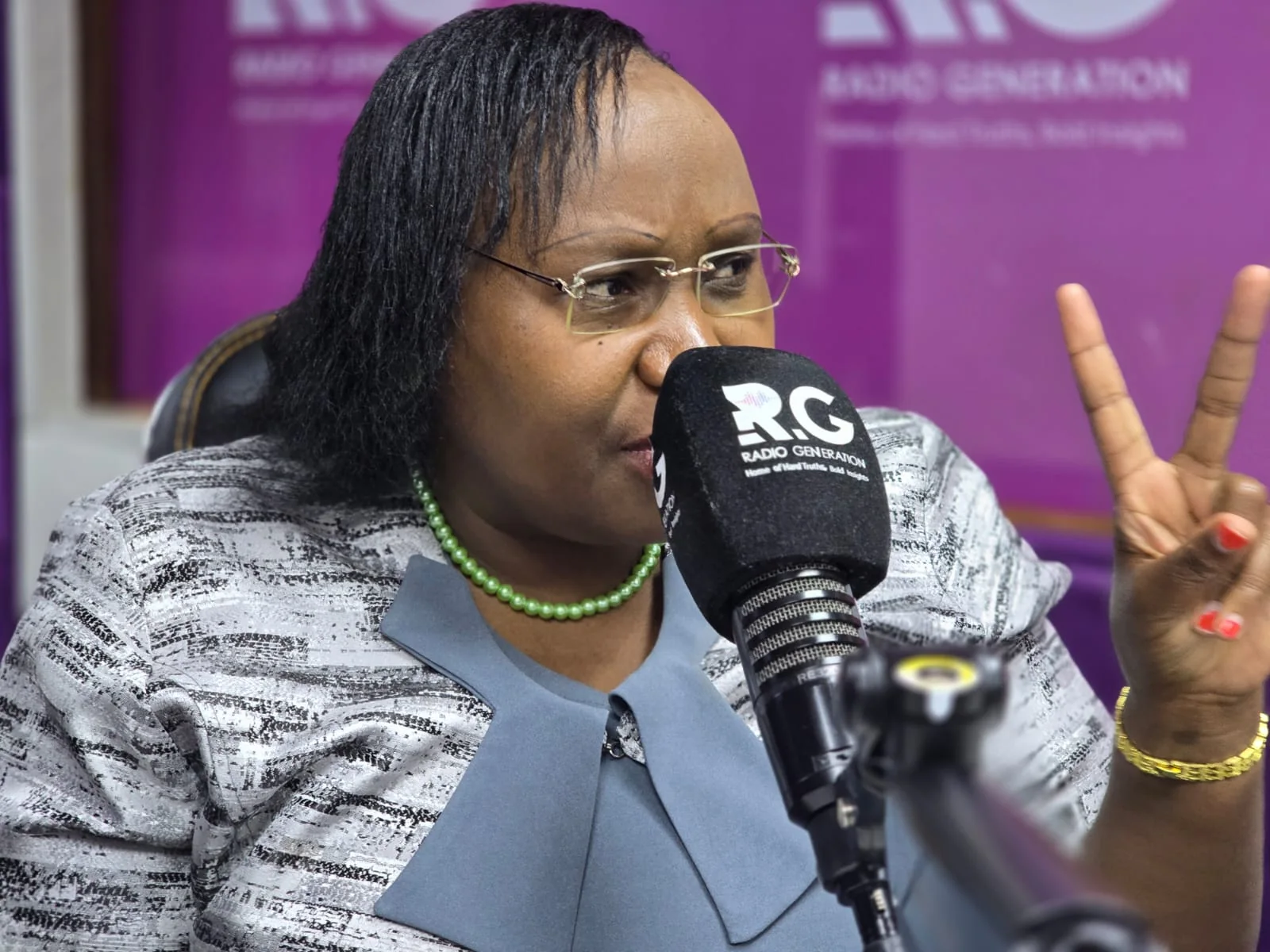
Waringa argued that while Kenyans continue to meet their tax obligations, government institutions have failed to translate those revenues into quality public services
Presidential aspirant Esther Waringa has unveiled a campaign agenda focused on combating corruption, improving public service delivery, and driving industrialisation across Kenya's 47 counties.
Speaking during an interview on Radio Generation on Monday, Waringa said her administration would prioritise prudent use of taxpayers' money, expand value addition in agriculture, and encourage county governments to establish industries to create employment opportunities for young people.
During the interview, she described herself as "the sixth president of the Republic of Kenya" and said her leadership would pursue economic, social, and governance reforms aimed at giving Kenyans greater "breathing space."
She argued that while Kenyans continue to meet their tax obligations, government institutions have failed to translate those revenues into quality public services.
"Kenyans are very loyal at paying taxes, but once the taxes get into the agencies of government that are supposed to give them the taxes back as services, they don't get the services back. That's why they are confined into a room where they cannot breathe. They pay taxes, but getting back water, energy, good school infrastructure, and food on the table remains a challenge."
The Presidential aspirant identified corruption as another major obstacle to development, saying public resources intended for service delivery were instead being lost through misuse.
"They pay these taxes, but after payment of taxes, what happens? The money goes into people's pockets, and these are some of the things that my administration is going to fight hard because we pay taxes so that we can get good classrooms and water. Women in the northern belt are still walking kilometres looking for water. Not with a Mama Taifa administration."
She also promised to transform Kenya's agricultural sector through value addition and local processing, arguing that exporting raw produce deprives farmers of higher incomes and the country of industrial growth.
"Since independence we have been talking about agriculture being the backbone of our economy. We have the best soils, the best climate and the best farmers, but families are sleeping hungry. Look at coffee, tea and milk; most of the raw materials are exported instead of being processed within the Republic of Kenya so that farmers can benefit ultimately."
Waringa explained that her administration would prioritise industrialisation as a driver of economic growth, predicting that Kenya could achieve double-digit economic expansion by investing in manufacturing linked to agriculture.
She also challenged county governments to establish industries in every county to absorb unemployed youth, saying devolved units had received significant allocations but had not invested sufficiently in job creation.
"Governors, what are you doing when we have such a big percentage of youths who are unemployed? Reserve money to ensure that we have an industry in each of the 47 counties. Kenya is very rich. We should have cotton processing in Migori, coconut processing at the Coast and industries across the country. Let us call it Operation Industrialisation at the Counties so that in 2026 we do not want to see our Gen Zs on the streets because of lack of jobs. We want to see them working instead of being hired by politicians for a few hundred shillings."
Waringa's remarks come against the backdrop of steadily rising funding for county governments over the past four financial years.
Counties received Sh370 billion as their equitable share in FY2022/23, which increased to Sh385.4 billion in FY2023/24 and Sh387.4 billion in FY2024/25.
In the current FY2025/26, Parliament approved a record Sh415 billion, representing an increase of Sh27.6 billion from the previous financial year.
However, the increase in allocations has been accompanied by concerns over spending priorities. The Controller of Budget reported that county governments spent Sh13.17 billion on local and foreign travel during the first nine months of FY2025/26, prompting renewed scrutiny over whether the growing allocations are delivering better public services, development projects and employment opportunities for wananchi.
https://twitter.com/RadioGenKe/status/2071493850586059011

Comments
Sign in with Google to comment, reply, and like comments.
Continue with Google