Ebola outbreak forces DR Congo to cancel Kinshasa World Cup training camp
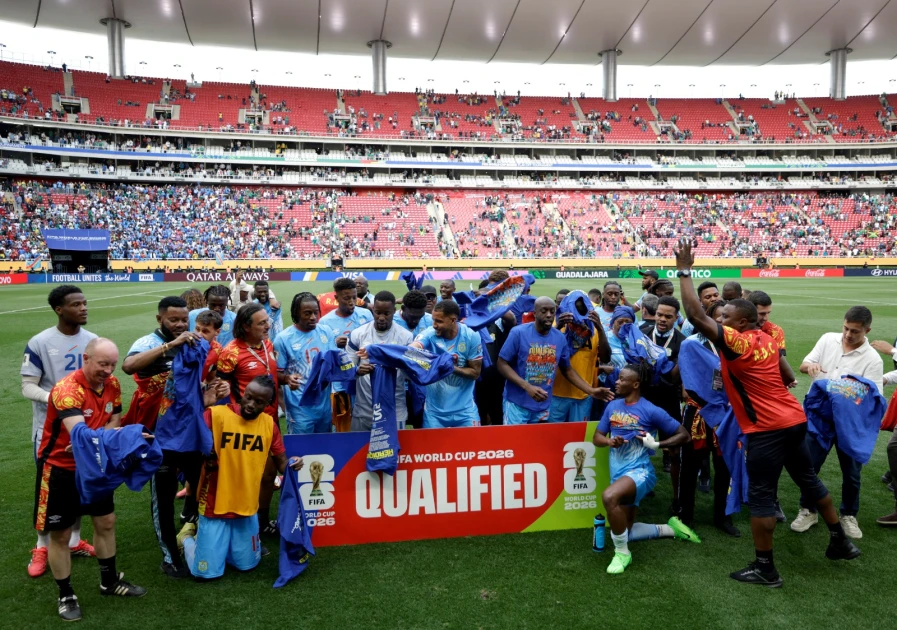
A spokesperson for DR Congo’s football team confirmed that the planned camp in the capital, which was set to begin on May 26 and include a public training session, will no longer take place. Instead, preparations will now be held in Belgium.
International travel restrictions linked to an Ebola outbreak in eastern DR Congo have forced the national football team to abandon plans for a home-based training camp in Kinshasa, pushing their World Cup preparations to Europe.
The move comes as health authorities continue to battle a growing outbreak that has already spread beyond its initial hotspot, with cases now confirmed in several eastern provinces and deaths rising.
The World Health Organization (WHO) has classified the outbreak as a "public health emergency of international concern", while stressing it is not at pandemic level.
A spokesperson for DR Congo’s football team confirmed that the planned camp in the capital, which was set to begin on May 26 and include a public training session, will no longer take place. Instead, preparations will now be held in Belgium.
Team official Jerry Kalemo said the decision ensures the squad can continue its build-up without disruption, with pre-tournament fixtures in Europe remaining unchanged. DR Congo is scheduled to face Denmark on June 3 in Belgium and Chile on June 9 in Spain ahead of the World Cup finals in the United States, Canada and Mexico.
The Leopards will open their World Cup campaign in Houston on June 17 against Portugal.
A statement shared on social media by the team said:
"Originally scheduled to take place in the capital on May 26, the Leopards' public training session will not be held after all. This decision follows reports of suspected Ebola cases in the provinces of North Kivu and Ituri,"
The statement added that uncertainty remains around a planned press briefing in Kinshasa involving head coach Sébastien Desabre.
According to another team spokesperson speaking to Reuters, the shift was also influenced by travel rules introduced by the United States, one of the World Cup hosts. The US public health agency has barred entry for non-US citizens who have been in DR Congo, Uganda or South Sudan within the past 21 days.
All players are based outside DR Congo, meaning the restrictions are not expected to affect the squad directly after the cancellation of the local camp.
However, some staff members who were in the country left on Wednesday, according to Jerry Kalemo, in line with the 21-day travel window.
Concerns have also been raised among fans and journalists who applied for US visas through the sports ministry after the US embassy in Kinshasa suspended visa services due to the outbreak.
A journalist from the national broadcaster questioned the blanket nature of the restrictions, asking:
"Why should the whole country be banned?"
Supporter Michel Nkuka Mbolandinga, known for impersonating former Prime Minister Patrice Lumumba, said:
"I am confident that I will be travelling, but I don't know how far the ministry is with the applications."
Reuters reported that the Kinshasa camp had been expected to attract fans and even President Felix Tshisekedi.
Health officials say the outbreak continues to evolve in eastern DR Congo, with the WHO estimating about 139 deaths from around 600 suspected cases, while the national health ministry places the toll at 159.
On Thursday, the M23 rebel group, which controls parts of the east, reported the first confirmed Ebola case in South Kivu province, a new area of concern far from the original outbreak zone in Ituri.
The outbreak is linked to the rare Bundibugyo strain of Ebola, for which there is no approved vaccine yet. The WHO has warned it could take up to nine months before one becomes available.




Comments
Sign in with Google to comment, reply, and like comments.
Continue with Google