Flood and landslide threat remains high, Met warns residents
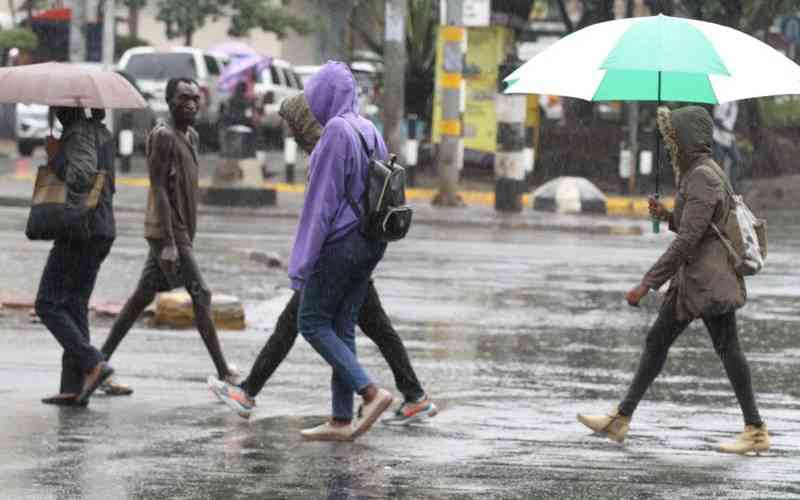
Most regions will experience showers and thunderstorms in the afternoons and evenings, with mornings expected to be partly sunny or cloudy.
Flooding and landslides continue to pose a serious threat in several parts of Kenya this week, even as the intensity of rainfall is expected to reduce, the Kenya Meteorological Department has said. Officials say the heavy rains that fell last week have left the ground soaked, meaning even lighter showers can trigger disasters, affect homes, and pollute water sources.
Acting Director of Meteorological Services Edward Muriuki said the situation remains fragile. "Rainfall may persist into early next week, maintaining elevated risks of flooding, landslides and water contamination,” he stated on Saturday, warning residents to stay vigilant.
The department’s forecast for the next five days indicates that while the severe storms of last week may ease, several regions will still see rainfall.
Areas likely to experience showers include counties in the Lake Victoria Basin such as Busia, Kisumu, Siaya, Homa Bay and Migori. Rain is also expected in parts of the Rift Valley and the western highlands, covering Nandi, Kakamega, Vihiga, Bungoma, Baringo, Nakuru, Trans Nzoia, Uasin Gishu, Elgeyo Marakwet, and West Pokot.
Other counties forecasted to receive rainfall include Kisii, Nyamira, Kericho, Bomet and Narok, along with the central highlands covering Nairobi, Kiambu, Murang’a, Kirinyaga, Nyeri, Embu, Tharaka Nithi, Meru, Nyandarua and Laikipia.
The southeastern lowlands of Machakos, Kajiado, Makueni, Kitui and Taita Taveta are also expected to see showers, together with coastal counties including Kwale, Mombasa and Kilifi.
Most regions will experience showers and thunderstorms in the afternoons and evenings, with mornings expected to be partly sunny or cloudy. Meteorologists say flooding can occur quickly because the soil in many areas is already saturated. Muriuki noted that parts of the country received more than 20 millimetres of rain last week.
“In meteorological terms, 20mm of rainfall equals approximately 20 litres of water per square metre,” he explained. “That amount of rain can quickly saturate soils, overwhelm drainage systems and cause flooding in low-lying areas.”
The department also predicts cold nights in some regions, with temperatures dropping below 10°C in areas of the Central Highlands, Central Rift Valley, and near Mt Kilimanjaro. Daytime temperatures above 30°C are expected in parts of the Coast, southeastern lowlands, north eastern, and north western Kenya.
This alert follows deadly floods in Nairobi and other regions in recent days. Police and emergency officials reported that at least 23 people died after heavy overnight rains caused flash floods in the capital. Several victims were swept away by strong floodwaters, while others were trapped in vehicles or electrocuted by submerged power lines.
Authorities said more than 70 vehicles were damaged, and multiple neighbourhoods experienced severe flooding as rivers overflowed and drainage systems failed.
Areas most affected in Nairobi included Westlands, Dagoretti, Embakasi, Kibra, Roysambu, and Kasarani. Weather stations recorded extremely high rainfall totals, with Wilson Airport measuring 160 millimetres in 24 hours, while stations at Moi Airbase, Kabete, and Dagoretti also recorded heavy rainfall.
The recent floods have reignited discussions on urban planning and drainage systems. Experts say poorly maintained drainage, blocked rivers, and settlements built near waterways worsen the impact of heavy rains. Officials are urging residents, particularly those in low-lying areas or near rivers and steep slopes, to exercise caution.
Public health officials are also warning that floodwaters can mix with sewage and garbage, contaminating water and increasing the risk of illnesses such as cholera and diarrhoea.
"The Meteorological Department will continue to closely monitor the evolving weather situation and provide timely updates to support preparedness and response efforts,” Muriuki added.
Flooding during the March to May rainy season is common in Kenya and has previously resulted in fatalities, property damage, and displacement in affected regions.




Comments
Sign in with Google to comment, reply, and like comments.
Continue with Google