President Ruto calls for shift to manufacturing to end Africa’s trillion-shilling losses
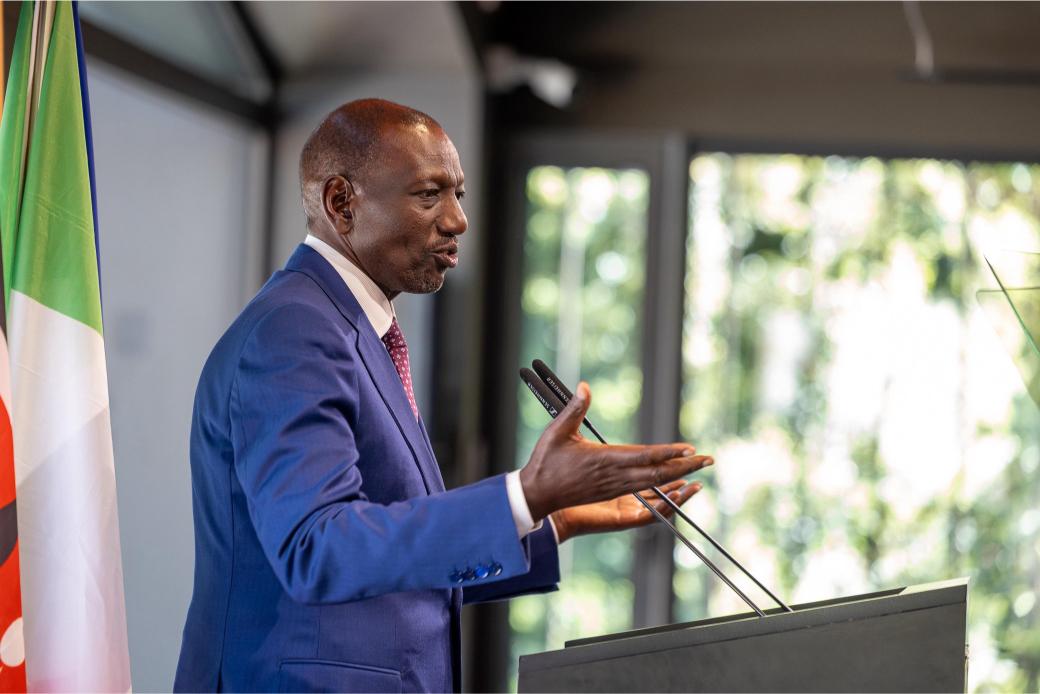
Speaking on Thursday in Nairobi during the Africa We Build Summit 2026, Ruto said Africa continues to miss out on vast income by selling unprocessed resources while buying back expensive manufactured products made from the same materials.
President William Ruto has pushed for a major shift in Africa’s economic model, warning that the continent is losing trillions of shillings by exporting raw materials instead of producing finished goods, and urging leaders to act quickly to reverse the trend.
Speaking on Thursday in Nairobi during the Africa We Build Summit 2026, Ruto said Africa continues to miss out on vast income by selling unprocessed resources while buying back expensive manufactured products made from the same materials.
“Yet paradoxically, we remain net importers of petroleum products to the tune of 120 million metric tons annually at a cost of about Sh11.6 trillion at an average export price of Sh9,675 per barrel.”
He pointed to agriculture as a clear example of lost opportunity, noting that while Africa produces food worth trillions, little of it is processed locally for export.
“Food production is valued at roughly Sh34.8 trillion each year. However, if this same production were refined domestically and exported as finished products at an average price of Sh103,200 per ton, it would generate over Sh64.5 trillion.”
He said the gap shows how much income the continent is leaving on the table.
“This represents forgone income of about Sh29.7 trillion, which is nearly 7.5% of our GDP from just one resource.”
Ruto added that further gains could come from industries linked to these raw materials, which Africa still imports instead of producing.
“This does not even account for the additional gains from downstream industries such as plastics and fertilizers, which we currently import and which could add another two to three percent of our GDP.”
https://twitter.com/RadioGenKe/status/2047249046708871407
The President said Africa’s trade structure remains unbalanced, with most countries relying on commodities while depending heavily on imports for finished goods.
“In many of our economies, over 60% of exports remain commodity-based, while we import nearly three times more manufactured goods than we export.”
According to the president, this has slowed industrial growth across the continent.
“It should not surprise us, therefore, that manufacturing has stagnated at about 10% of GDP for the last two decades.”
He said Africa now has the numbers and market size to change direction, pointing to a population of 1.5 billion and a growing middle class.
“Today, with a population of 1.5 billion people and a middle class of between 300 and 350 million people, we have no such excuse.”
Ruto outlined three areas he said are key to driving change, starting with stronger regional integration to support the movement of goods and resources.
“Our countries possess complementary endowments; this must be connected through infrastructure, roads, rail, ports and electricity grids, so that raw materials and intermediate goods can move freely across borders.”
He said integration must also ensure that benefits are shared fairly to support a working common market across African countries.
The president also called for joint industrial development, especially in sectors tied to clean energy and global shifts in production.
“We must now move deliberately to pool these resources and position ourselves competitively in the global green manufacturing arena.”
He stressed that affordable energy will be critical to making African industries competitive.
“We cannot achieve competitiveness without affordable energy, making large scale investment in renewable energy an urgent priority.”
Ruto further urged African countries to rely more on their own financial systems rather than external funding.
“Our ambitions will remain unrealized if we continue to depend on external capital whose primary interest is securing raw materials for their own industries.”
He announced that Kenya will increase its contribution to the Africa Finance Corporation by Sh3.2 billion as part of efforts to strengthen African-led financing.
“We will continue as leaders in this continent to build our own African financial institutions, give them the capacity.”
The president cited Kenya’s past fuel supply challenges, saying local financing helped resolve the crisis when international support was not available.
“It is only one bank, one Kenyan bank, Kenya Commercial Bank, that was willing to issue letters of credit and stand with us at that very critical moment.”
He said the approach delivered lasting results.
“We not only solved that problem in a very permanent way, the outcome is a win-win.”
Ruto also pointed to the country’s housing programme as another example of using domestic resources to support development.
He ended by urging African leaders to take bold steps and stop delaying change.
“Transformation is neither accidental nor a miracle. It is deliberate, it is intentional, and it is entirely within reach.”
“The time has come for Africa to take full control of its destiny.”



Comments
Sign in with Google to comment, reply, and like comments.
Continue with Google