KICD warns schools against costly trap of unapproved learning materials

The Kenya Institute of Curriculum Development (KICD) says many of the materials being sold as CBE support resources have never undergone official review and approval, despite being aggressively marketed to schools across the country.
As schools prepare learners under the Competency-Based Education (CBE) system, education officials have raised concern over a growing market of unapproved books and assessment materials that they say is costing parents and schools millions of shillings while exposing learners to misleading content.
The Kenya Institute of Curriculum Development (KICD) says many of the materials being sold as CBE support resources have never undergone official review and approval, despite being aggressively marketed to schools across the country.
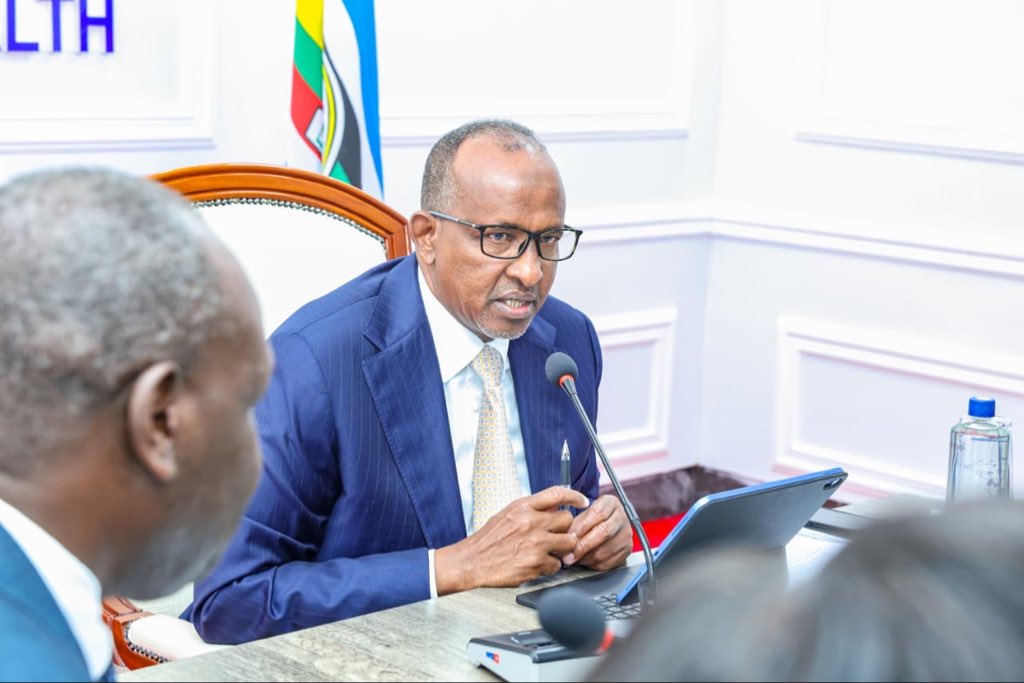
Speaking during the 49th Kenya Secondary School Heads Association (KESSHA) annual conference in Mombasa, KICD Chief Executive Officer Prof Charles Ong’ondo said the trend threatens to derail gains made in implementing the curriculum by introducing content that does not meet required standards.
“It pains me when I see people marketing everything in the name of CBE. Some of those materials are even being marketed here at this conference, yet they have never been approved by KICD,” he said.
According to Prof Ong’ondo, schools are increasingly being targeted by traders selling revision books, assessment packages and other materials that fall outside the approved curriculum framework.
He cautioned school heads against purchasing commercial assessment products, noting that learner evaluation under CBE is already guided through systems developed by the Kenya National Examinations Council (KNEC).
“You are wasting your resources, you are wasting your energy and you are courting a problem. Because we have already provided school-based continuous assessment. Assessment of learning is not the core thing. The core thing in CBE is assessment as learning, and assessment for learning,” Prof Ong’ondo said.
The curriculum expert said some of the materials currently in circulation contain content that fails to consider Kenya's diverse social, cultural and religious backgrounds.
“Some of those materials are very offensive to some sections of Kenya. Producing Kenyan curriculum support materials is not an easy task because we have to consider the country’s broad spectrum of religion, ethnicity, gender and climatic conditions. Many of those materials are offensive to some sections of Kenyans, including content that is not acceptable in Kenya,” he said.
Kenya's textbook market allows schools to receive government-supplied books that have been approved by KICD while also giving institutions the freedom to buy additional resources from private publishers.
However, Prof Ong’ondo said the open market has become a major entry point for low-quality materials that have escaped proper scrutiny.
He urged authorities to take action against those involved in producing and distributing such resources.
“These materials they’re selling... is there any peer reviewer, leave alone KICD or any renowned publisher? Is there any editor who has looked at them? So beware of the one-man, one-woman publishing house hawking materials,” Prof Ong’ondo said.
He also called for stricter screening of vendors exhibiting educational materials at conferences and school functions, saying many are taking advantage of educators seeking curriculum support resources.
On the transition to senior school, Prof Ong’ondo said Grade 10 textbooks for all subjects had already been supplied to schools based on figures provided by the Ministry of Education.
He, however, acknowledged that differences between projected enrolment numbers and actual admissions had created distribution challenges.
As a result, some schools received books for learning areas they do not offer, while others received fewer copies than required.
To address the problem, he appealed to principals to submit accurate information on student enrolment and subject selections to help improve future allocations.
The KICD chief further disclosed that learning materials for Grade 11 have already been assessed and approved, and procurement contracts awarded to successful publishers.
Despite this progress, he said the printing and distribution process has stalled because publishers are owed about Sh10 billion, delaying large-scale production of the books.
Prof Ong’ondo noted that many schools unknowingly spend money on resources that have not passed KICD's quality assurance procedures.
He explained that approved curriculum materials go through a rigorous process involving teachers, curriculum specialists, subject experts and several levels of review before they are cleared for use in schools.
“Some of you have participated in KICD as evaluators and understand how rigorous this process is. Before I joined KICD, I also attempted to write curriculum materials. Many of my manuscripts were rejected and only one was approved. Producing quality curriculum support materials is not an easy task,” he said.
He warned that a large portion of some learning materials currently being marketed to schools either do not support the curriculum or fail to meet the standards expected under CBE.
“Approval is important because a significant proportion of these materials have nothing to do with the curriculum. They simply exploit schools and parents who believe they are buying resources that will improve learning,” he said.
Prof Ong’ondo particularly criticised the sale of assessment packages, saying the practice is inconsistent with the goals of the competency-based system.
Recalling a recent incident, he said: “A young lady, about my daughter’s age, approached me and said, ‘Mwalimu, I am selling the next assessment combination for junior school.’ I told her she should actually be arrested because junior school is not about those assessment packages.”
He directed principals, education officers and Teachers Service Commission officials to work closely in identifying individuals selling unapproved curriculum materials.
“If you visit a school and find curriculum materials that have not been approved by KICD, quietly confiscate them and report the matter to the nearest police station. The Communications Authority of Kenya will also come in and deal with the offenders,” Prof Ong’ondo said.



Comments
Sign in with Google to comment, reply, and like comments.
Continue with Google