SME expert warns against using SACCO savings for infrastructure projects
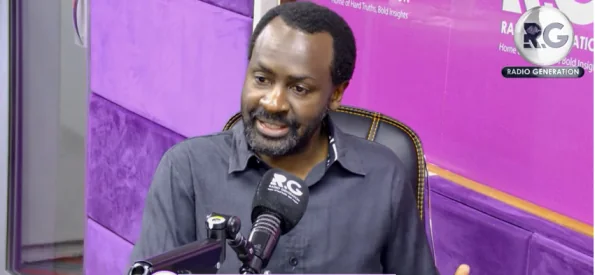
Speaking on Radio Generation on Tuesday, Mwinamo argued that SACCOs remain one of the few reliable financing options for small and medium-sized enterprises (SMEs), many of which struggle to access bank loans.
Concerns over proposals linked to the government's National Infrastructure Fund have sparked fresh debate over the safety of cooperative savings, with SME expert Joram Mwinamo warning that using SACCO resources to finance long-term infrastructure projects could limit access to affordable credit for small businesses and weaken public trust in the cooperative movement.
Speaking on Radio Generation on Tuesday, Mwinamo said SACCOs remain a vital source of financing for small and medium-sized enterprises (SMEs), especially at a time when many businesses are unable to secure loans from commercial banks.
"Because banks have been putting a lot of their money in government, that is the reason why they cannot lend businesses to buy equipment," he said.
He cautioned that channeling SACCO funds into government infrastructure projects would lock away members' savings for extended periods, making it harder for entrepreneurs to access the loans they rely on to expand their businesses.
"SACCOs were the last lifeline because SMEs cannot easily borrow from banks. They go to their SACCO hoping to borrow money to grow their business," he said. "If that money goes to a long-term government infrastructure project, it means you are actually going to have that money tied there for quite a long time."
Mwinamo also questioned whether SACCO members would support exposing their savings to such investments, saying many would first want to understand the risks involved and the effect on their ability to borrow.
"If my SACCO came and put it to a vote that my SACCO should lend to government infrastructure projects, I would try to know how I am first risking my money going in that direction and, second, depriving myself of any little money I may be able to borrow to run my small biashara," he said.
His remarks come amid widespread speculation that the government planned to use more than Sh1 trillion held in SACCO savings to finance projects through the National Infrastructure Fund.
The National Treasury has, however, dismissed the claims as "entirely fake and malicious," maintaining that it has no plans to borrow SACCO members' deposits. According to the Treasury, the fund will instead be financed through legally established sources, including parliamentary allocations, grants, concessional loans and investment returns.
Even so, Mwinamo said the public response to the reports pointed to a wider crisis of confidence in public institutions.
"I think by yesterday there was already panic withdrawals from SACCOs," he said, adding that members could easily move their money through mobile banking platforms if they feared their savings were at risk.
"That tells you the amount of trust that people would have in a setup like this."
He warned that any attempt to restrict access to members' savings would only deepen fears.
"It is your money sitting there, so telling me I can't get access to it only increases my anxiety level. It actually confirms there is a problem," he said.
Mwinamo urged the government to carry out broad public engagement before pursuing any policy that could affect cooperative savings.
"There needs to be a lot of widespread messaging... the proposal hasn't gone through. The structure needs to be set up and there is a lot that needs to happen before that takes off," he said.
While supporting investment in infrastructure, he said the government must first build confidence by showing that projects will be managed openly and deliver value to the public.
"Who doesn't want roads, railways, airports and many other kinds of infrastructure? These ideas are awesome and good," he said. "The problem is the trust deficit."
He further questioned the level of transparency surrounding major public investments, saying Kenyans are rarely provided with feasibility studies, projected returns or procurement details.
"We have become comfortable as a country with a culture of lack of transparency in government," he said.
Mwinamo called on the government to improve governance, make project information publicly available and allow meaningful public participation before seeking support from institutions entrusted with members' savings.
"If they told us exactly what the plan is and allowed people to interrogate it, it would be much easier to prove the case," he said.




Comments
Sign in with Google to comment, reply, and like comments.
Continue with Google