Ethiopia PM Abiy Ahmed wins country's general election amid fears of renewed conflict
The Prosperity Party, which won 438 of the 501 contested seats, will form the new government with Abiy set to be sworn in for another term at the beginning of October. It is a boon for Abiy's supporters, who believe he will continue with the economic gains he has overseen.
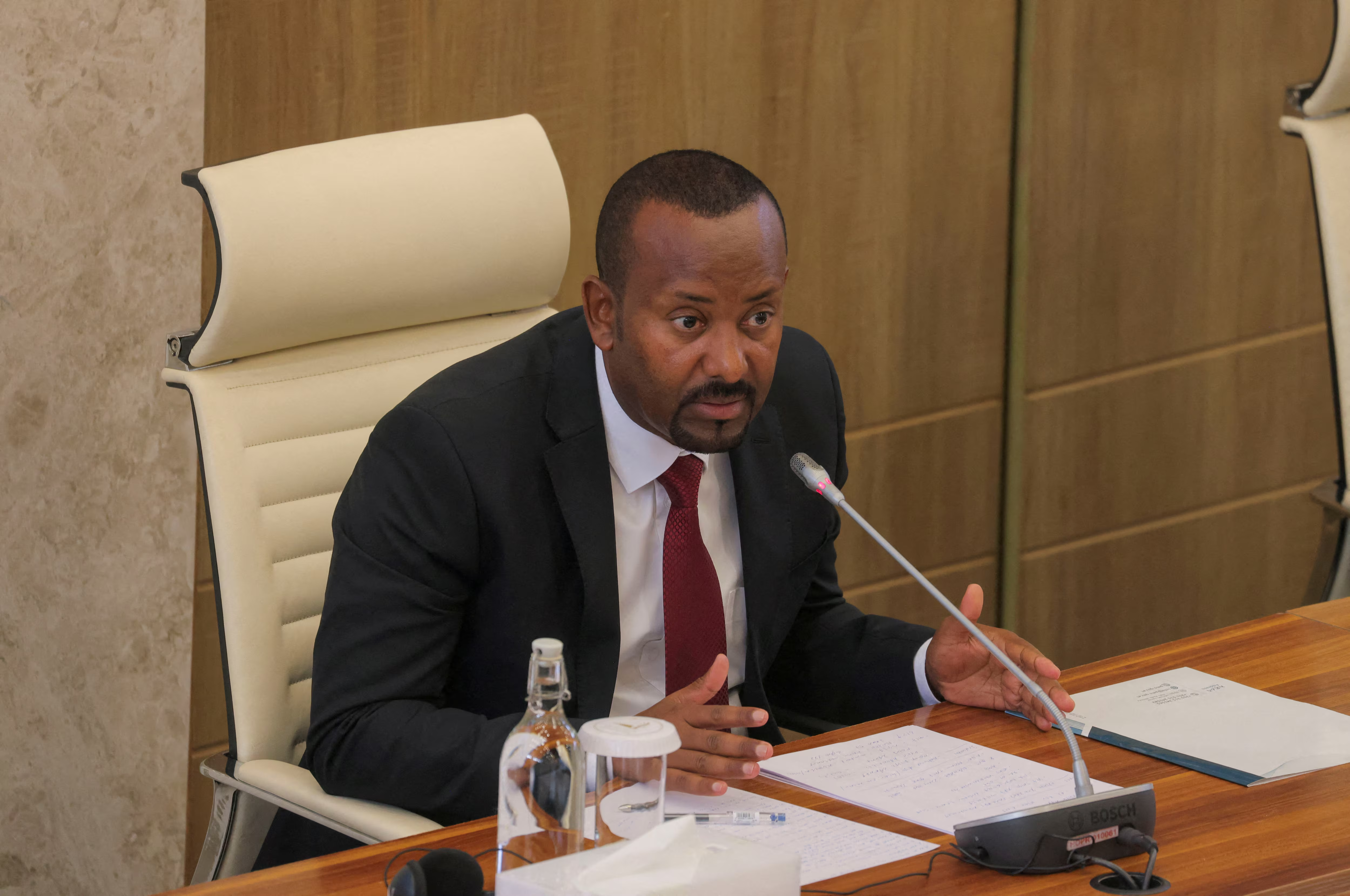
Ethiopian Prime Minister Abiy Ahmed is the big winner following the country's general election as his party has retained its overwhelming parliamentary majority, despite the poll being overshadowed by conflict, accusations of repression and little participation by opposition parties.
The Prosperity Party, which won 438 of the 501 contested seats, will form the new government with Abiy set to be sworn in for another term at the beginning of October. It is a boon for Abiy's supporters, who believe he will continue with the economic gains he has overseen.
But others fear the internal divisions and security challenges facing Africa's second most populous country are only going to get worse with Abiy at the helm.
The 49-year-old first came to power amid anti-government protests in 2018, and he was at first hailed for his campaign to heal divisions - though he upset politicians from the northern region of Tigray who had dominated the government for more than two decades.
Just a year later he won the Nobel Peace Prize, mainly for his efforts in ending hostilities with Ethiopia's northern neighbour, Eritrea.
But security experts fear the country could be heading back to war, while the violent and deadly insurgencies in Ethiopia's Amhara and Oromia regions show no sign of ending.
On election day, 143 polling stations failed to open in the country's two most populous regions because of safety concerns caused by armed groups fighting the government.
The Fano militias in Amhara and the proscribed Oromo Liberation Army (OLA) in Oromia, which both want greater autonomy, rejected the election and its results.
The situation is also troubling in Tigray, which is still recovering from a two-year civil war that only ended in 2022. The region and its six million inhabitants, comprising 38 constituencies, were completely excluded from the poll amid rising fears that fighting could break out once more.
Tigray borders Eritrea and during the war, its troops were allied with Ethiopian government forces. They were accused of widespread atrocities against Tigrayan civilians, which were denied. But since the conflict ended, relations between Addis Ababa and Asmara have sharply deteriorated.
Eritrea, with its 1,350km (840-mile) coastline, accuses landlocked Ethiopia of having imperial ambitions. Over the last three years Abiy has repeatedly spoken of his country's need to regain access to a Red Sea port, which it lost when Eritrea became independent in 1993.
In a dramatic about-turn, Asmara has now allied itself with Tigray's leaders - and should any new conflict erupt, it is likely that Eritrea would side with Tigrayan forces and vice-versa.
Addis Ababa has also been accused of involvement in the civil war in Sudan, which borders both Ethiopia and Eritrea.
Multiple reports have alleged that Addis Ababa has supported one of Sudan's warring factions, the Rapid Support Forces (RSF), although Ethiopia has repeatedly denied this.




Comments
Sign in with Google to comment, reply, and like comments.
Continue with Google