MPs order review of Sh2.8m exam payments at Council of Legal Education
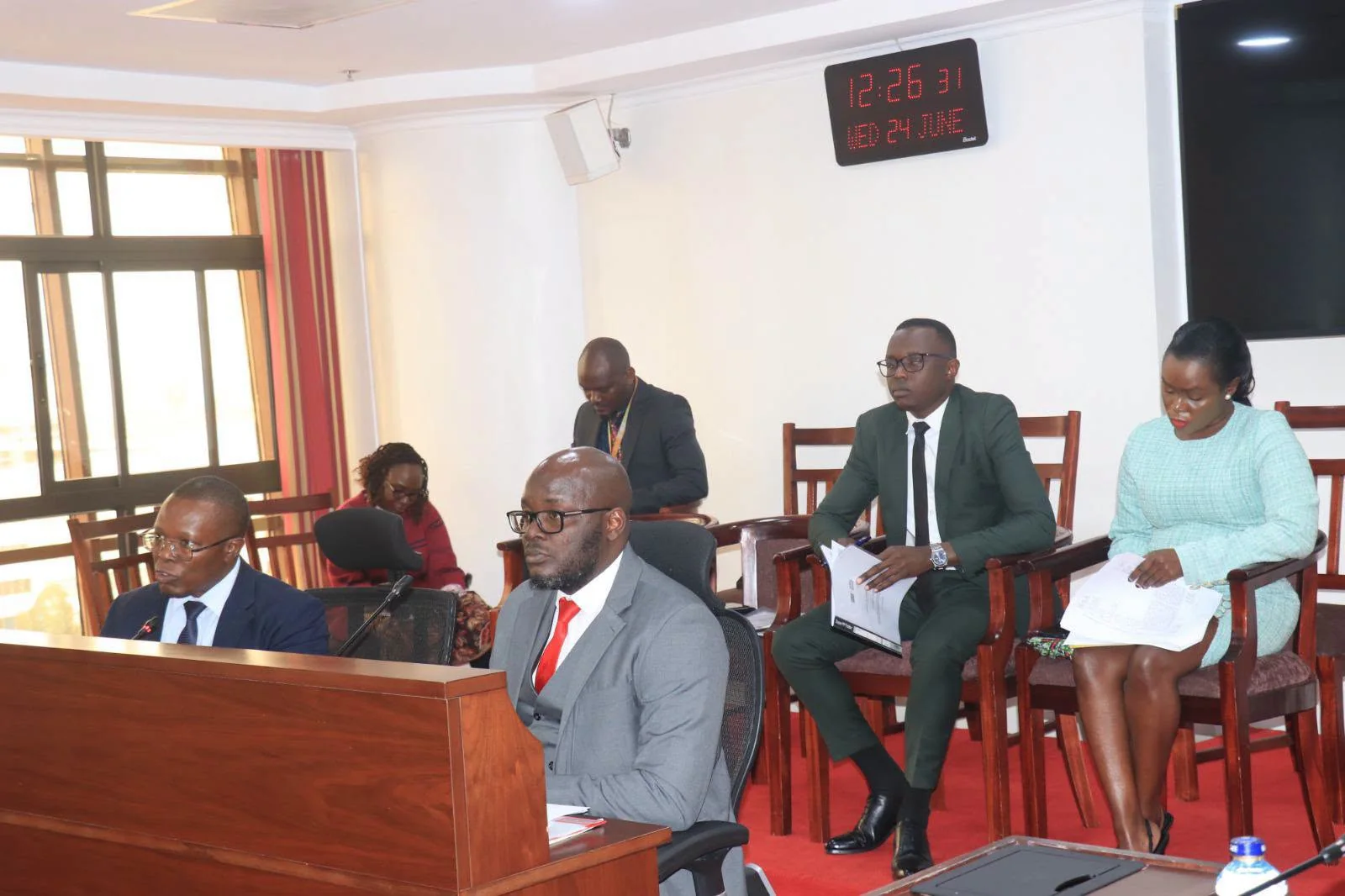
Appearing before the committee, CLE Chief Executive Officer Prof. Busalie Jack Mwimali defended the payments, saying they related to outsourced examination services involving judges, magistrates and practising advocates engaged for specific assignments.
A Sh2.8 million bill for examination services has landed the Council of Legal Education in Parliament's spotlight, with MPs demanding answers over payments made to examiners and invigilators without clear proof of SRC approval.
The issue emerged before the National Assembly Public Investments Committee on Governance and Education as members examined Auditor-General reports covering the financial years 2021/2022 to 2024/2025. The committee questioned payments made by the Council of Legal Education (CLE) to examiners, moderators and invigilators, with concerns raised over whether the allowances complied with guidelines set by the Salaries and Remuneration Commission (SRC).
Appearing before the committee, CLE Chief Executive Officer Prof. Busalie Jack Mwimali defended the payments, saying they related to outsourced examination services involving judges, magistrates and practising advocates engaged for specific assignments.
“First of all, if I may have appeared to be adamant to the committee, that’s not the case. I have a lot of respect for the authority of the committee,” said Prof. Mwimali.
He explained that the individuals involved in setting, marking and moderating examinations were not employees of the council and had therefore been engaged through a procurement process.
“When we do the setting, marking and moderation of these exams, we bring in outsiders who are not our salaried employees,” he said. “The council has taken the process of using procurement methods because these are specialised categories of professionals.”
However, members of the committee maintained that engaging professionals through procurement could not exempt the council from complying with SRC requirements where allowances are concerned.
Committee vice-chairperson and Kasipul MP Boyd Ong’ondo Were challenged the CEO's explanation and questioned whether the council was disputing the Auditor-General's findings.
“So you’re trying to tell us, as a committee, that the auditor is wrong?” posed Hon. Were.
Embakasi West MP Mark Mwenje said the matter was straightforward and that other public institutions had already established clear procedures for handling similar payments.
“What you are doing is not unique,” said Hon. Mwenje. “IEBC does the same thing. They recruit temporary staff for a specific period, seek SRC guidance on allowances, pay them and that’s it.”
Mwenje argued that while procurement laws govern the acquisition of services, allowances paid to individuals still fall under SRC's constitutional mandate.
“If you are procuring services, that falls under the Procurement and Disposal Act. But if you are paying allowances to individuals, then SRC must approve,” he said.
He further cautioned the council against creating alternative approaches to matters that have already been addressed by existing regulations, noting that Parliament and other public institutions had previously encountered similar challenges before aligning with SRC guidelines.
Imenti Central MP Moses Kirima also faulted the council's position, insisting that constitutional provisions on remuneration and public expenditure must be observed by all public bodies.
“The Constitution is supreme,” Hon. Kirima said. “There is no other law or institution beyond the Constitution. When it is said that SRC approval is not needed, it means somebody is undermining the Constitution.”
Kirima called for a detailed review of the payments to establish whether those engaged by the council received amounts above approved rates.
“We want auditors to establish what each person was entitled to and compare it with what was actually paid so that responsibility can be fixed,” he said.
Auditors also raised concerns over the lack of clarity on how the rates paid to examiners, moderators and invigilators had been determined.
“The challenge we are facing is that we do not know the basis of the rates they are paying,” an auditor told the committee.
In response, Prof. Mwimali acknowledged that some of the rates currently being used stem from practices adopted when the council started independently administering examinations after separating from the Kenya School of Law examination process.
“These are historical practices since the council started the assessment process in 2016,” he said.
The CEO told lawmakers that the council would revisit the matter and formally seek guidance from SRC on the applicable rates going forward.
“We will actually go and get those rates from SRC,” he assured MPs.
The committee directed the council to submit detailed justification for the payments, including the categories of professionals engaged and the criteria used in determining the allowances paid for examination-related work.




Comments
Sign in with Google to comment, reply, and like comments.
Continue with Google