How two Russian climbers inspired Kenya’s latest online advertising wave
Media reports in the United States said they were charged with felony burglary, reckless endangerment and other offences commonly linked to entering and climbing restricted landmarks without permission.
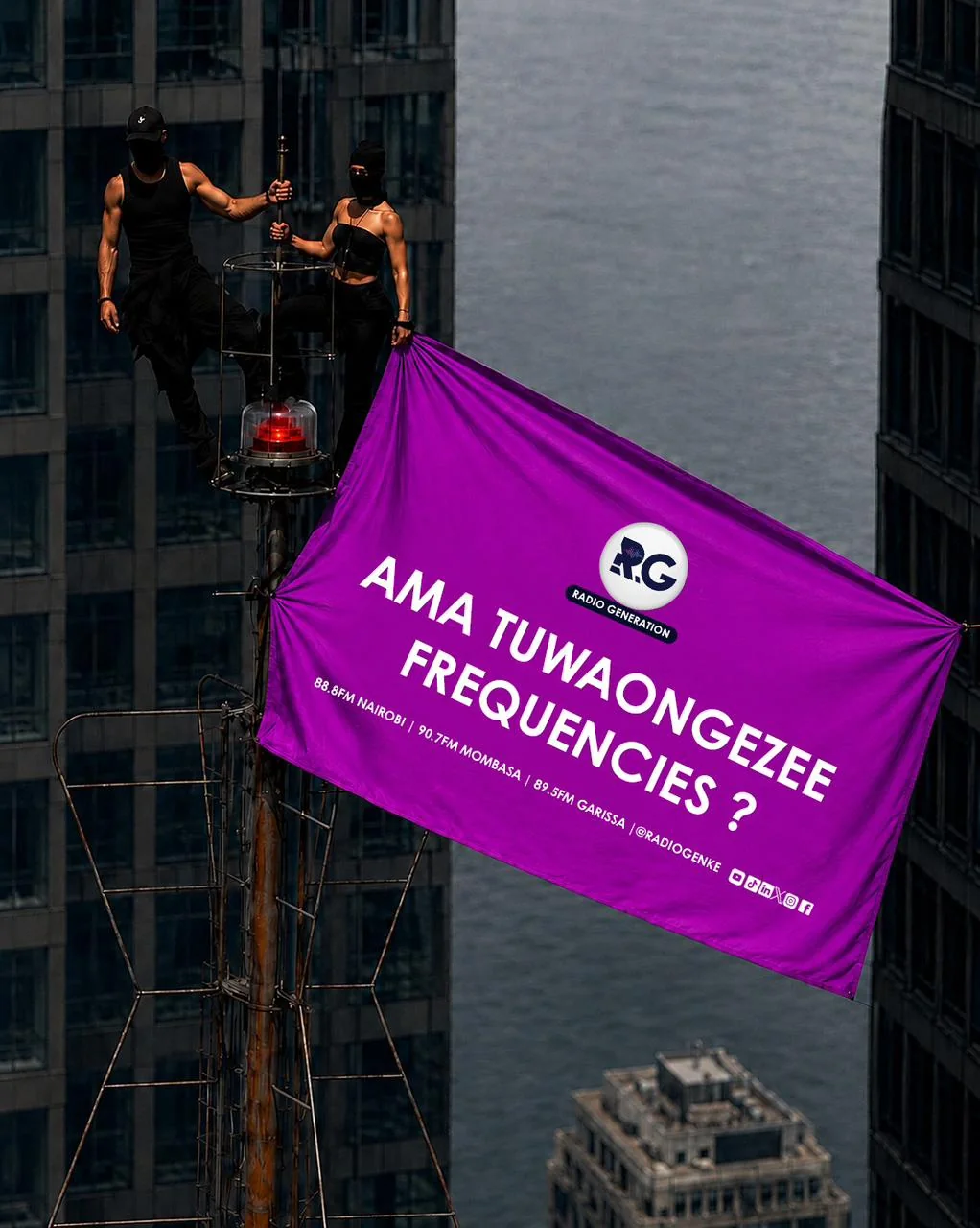
What began as a daring rooftop climb in New York has quickly found a second life in Kenya, where businesses have transformed the dramatic stunt into one of the country's biggest online marketing trends, flooding social media with humorous AI-generated adverts aimed at winning over internet users.
The unexpected craze traces back to last Wednesday when Russian rooftoppers Angelina Nikolau and Ivan Kuznetsov climbed the Empire State Building without safety equipment and reached the top of the 102-storey landmark. Wearing dark clothes and face masks, the pair unfolded a black banner carrying the message, “When the power of love beats the love of power, the world knows peace.”
Videos shared online also appeared to show Kuznetsov proposing to Nikolau while standing high above Manhattan, adding another dramatic moment to an already risky stunt. The two later climbed down before police arrested them.
Media reports in the United States said they were charged with felony burglary, reckless endangerment and other offences commonly linked to entering and climbing restricted landmarks without permission.
The couple is no stranger to dangerous climbs. Nikolau and Kuznetsov built a global following through their rooftop adventures and were featured in the 2024 Netflix documentary Skywalkers: A Love Story, which follows their daring climbs on skyscrapers, bridges and construction sites across different countries.
While global audiences focused on the arrest and the legal consequences, Kenyan brands saw something entirely different — an opportunity to capture attention on social media.
Within hours, the images had been transformed into a local internet sensation. The original footage gradually gave way to AI-generated versions showing characters balancing on towering buildings while displaying banners carrying jokes, advertisements and promotional messages instead of the original call for peace.
The speed with which companies embraced the trend showed just how quickly Kenyan brands now react to viral moments. Rather than spending days reviewing campaigns, businesses from different industries joined the conversation almost immediately.
Safaricom was among the first major brands to ride the wave with a post asking, “Tupandishe Fuliza limit?” referring to its digital overdraft service. The post attracted thousands of comments and nearly a million views on X.
It did not take long before more companies joined in. Kenya Airways and Jambojet created their own versions, while flour manufacturer Raha delivered one of the most relatable local adaptations by placing packets of maize and wheat flour beneath the climbers on the narrow ledge.
The trend soon spread far beyond corporate offices. Neighbourhood pubs promoted themed nights using similar designs, travel companies advertised holiday packages and event organisers used the format to market concerts and entertainment events.
As the meme evolved, the Russian climbers slowly disappeared from many of the recreated images. In several versions, they were replaced by an AI-generated moran balancing on a skyscraper antenna while displaying banners promoting holidays in Mombasa and other local attractions.
The trend also reflects how artificial intelligence is changing digital marketing. With a simple AI prompt and a creative caption, businesses can quickly produce content capable of attracting huge audiences without spending heavily on traditional advertising.
Even so, the growing use of viral trends in marketing continues to divide opinion among industry professionals.
Some believe joining trending conversations is now an important part of staying visible online, especially because internet memes rarely remain popular for long.
Others argue that blindly following every viral moment weakens originality and can easily backfire if the content feels forced or fails to match a company's identity. In such cases, brands risk appearing disconnected from their audiences and becoming the subject of online criticism instead of attracting positive attention.




Comments
Sign in with Google to comment, reply, and like comments.
Continue with Google